Light jets and turboprops

The smaller end of private aviation, and the most cost-effective for short trips. Check which aircraft can fly your route nonstop, then compare the categories.

01Range checker

Can a small aircraft fly it nonstop?

Pick two airports from the list and the number of passengers. You’ll see the distance, an estimated flight time and which categories can do it without a fuel stop.

165 nmTeterboro (TEB) to Boston Logan (BOS), about 189 statute miles
Small aircraft on this route (estimates)
AircraftTypical rangeNonstop?Flight timeFlight-time cost
Turboprop~1,800 nmNonstop1 h$1,800–3,200
Very light jet1,400–1,550 nmNonstop50 min$2,400–3,500
Light jet2,000–2,150 nmNonstop50 min$2,800–4,400
Midsize jet~2,100 nmNonstop45 min$3,500–5,500
Super-midsize jet3,200–4,000 nmNonstop45 min$5,000–7,300

Estimates only. Times include about 25 minutes for taxi, climb and descent, plus 45 minutes on the ground for each fuel stop. Costs are flight time at typical US hourly ranges, before tax, fees, repositioning and daily minimums.

Get an all-in quote for this route

02The categories

Three ways to fly small.

Seats, range and hourly cost are typical US figures. Specific aircraft vary, and every quote names the exact model.

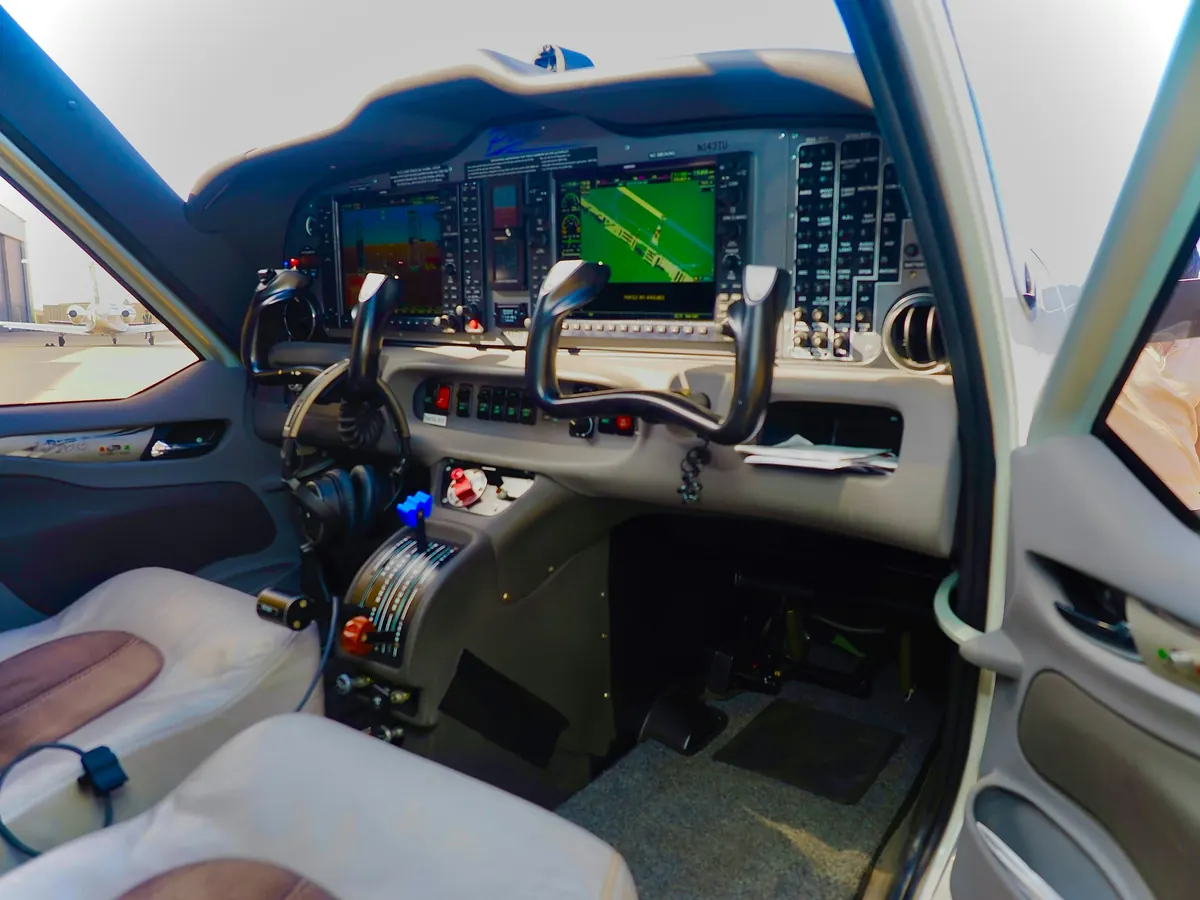
Glass cockpit of a small single-pilot aircraft

Turboprop

Pilatus PC-12, King Air 350

Seats
6–9
Range, nm
~1,800
Per hour
$1,800–3,200

Propeller-driven but turbine-powered, turboprops such as the Pilatus PC-12 and King Air 350 are the lowest-cost way to fly privately on short routes, and they reach runways most jets can’t.

Good for

  • Trips under about 300 miles
  • Short or unpaved runways
  • Skis, bikes and bulky bags (large cargo door on the PC-12)

Watch for

  • Slower cruise, roughly 270–310 knots
  • A busier ride below the weather on long legs

Rear view of a small jet’s engine and tail on the ramp

Very light jet

HondaJet, Citation M2

Seats
4–5
Range, nm
1,400–1,550
Per hour
$2,800–4,200

The smallest jets, such as the HondaJet and Citation M2, carry four or five people at jet speed for less than a light jet. Cabins are compact and bag space is limited.

Good for

  • Two to four travellers with light bags
  • Regional trips of one to two hours
  • Getting jet speed at a lower hourly rate

Watch for

  • Tight cabin and baggage space
  • Shorter range, 1,400–1,550 nm on paper
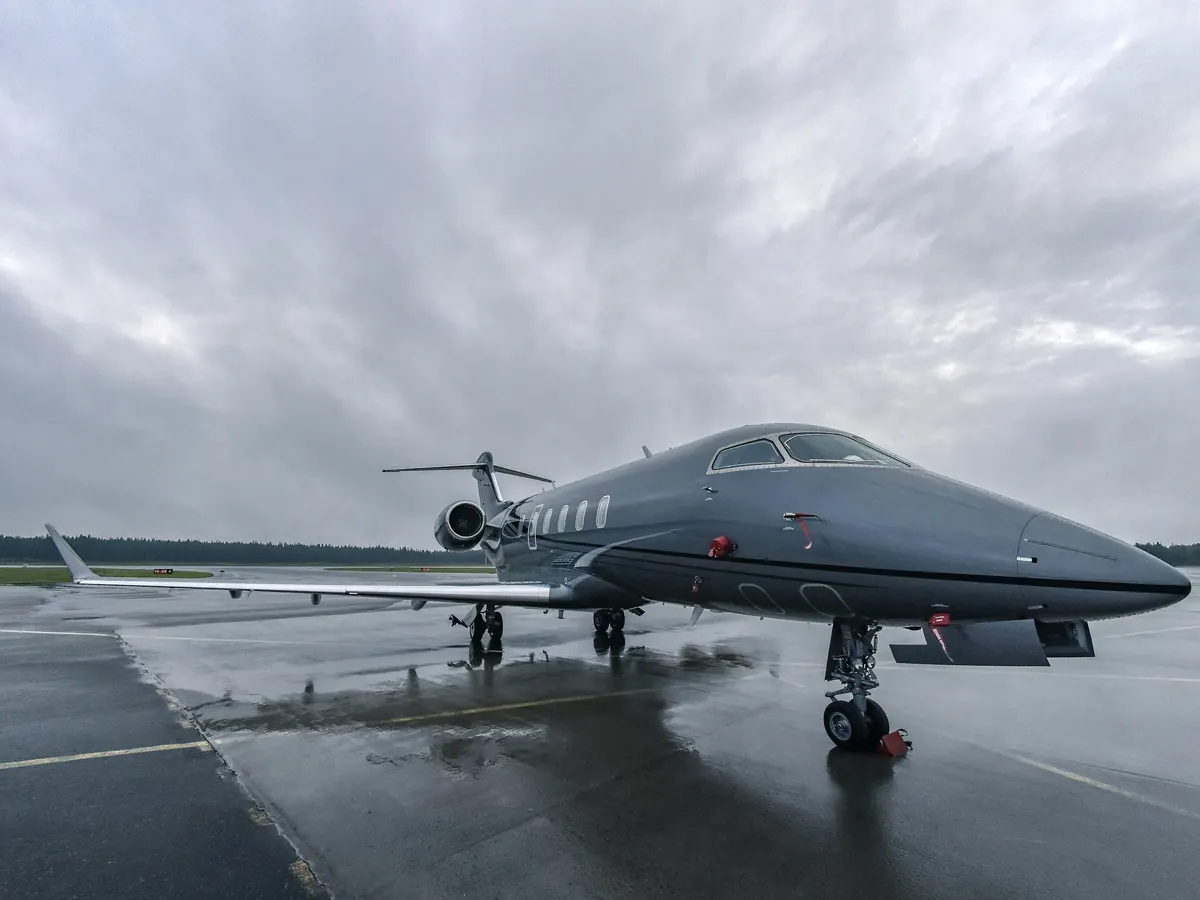
Grey business jet parked on a wet ramp under heavy cloud

Light jet

Phenom 300E, Citation CJ4, Learjet 75

Seats
6–8
Range, nm
2,000–2,150
Per hour
$3,500–5,500

Light jets such as the Phenom 300E, Citation CJ4 and Learjet 75 are the workhorses of short-haul charter: fast, efficient and comfortable for trips up to about three hours.

Good for

  • Trips of one to three hours
  • Groups of up to six with normal luggage
  • A smoother ride at altitude

Watch for

  • No stand-up cabin, about 4.8–4.9 ft
  • Longer runways than a turboprop

03Reading the result

Why the checker leaves a margin.

The checker measures the great-circle distance between the two airports, the shortest path over the earth. Real flights follow airways and departure procedures, so they fly a little further. It then treats about 80% of each category’s lower published range as a comfortable nonstop distance.

That margin covers what brochures leave out: the fuel reserves every flight must carry, headwinds, which are strongest flying west in winter, and the weight of a full cabin and bags. A trip in the amber band can often be flown nonstop, but the operator decides on the day based on winds, weather and load.

Runways matter too. Short runways, high-elevation airports such as Aspen, and hot afternoons all reduce how much fuel and weight an aircraft can take off with. The operator checks every leg against the aircraft’s performance data before confirming.

The costs shown are flight time only, at typical US hourly ranges. A real quote adds the 7.5% federal excise tax, segment fees and airport charges, and can include repositioning or a daily minimum. Ours shows every one of those lines.